What types of crane hooks are there?
There are many categories of hooks. Generally speaking, they can be divided into forged crane hook and laminated hooks according to different manufacturing methods; and they can be divided into single hooks and double hooks according to different shapes.
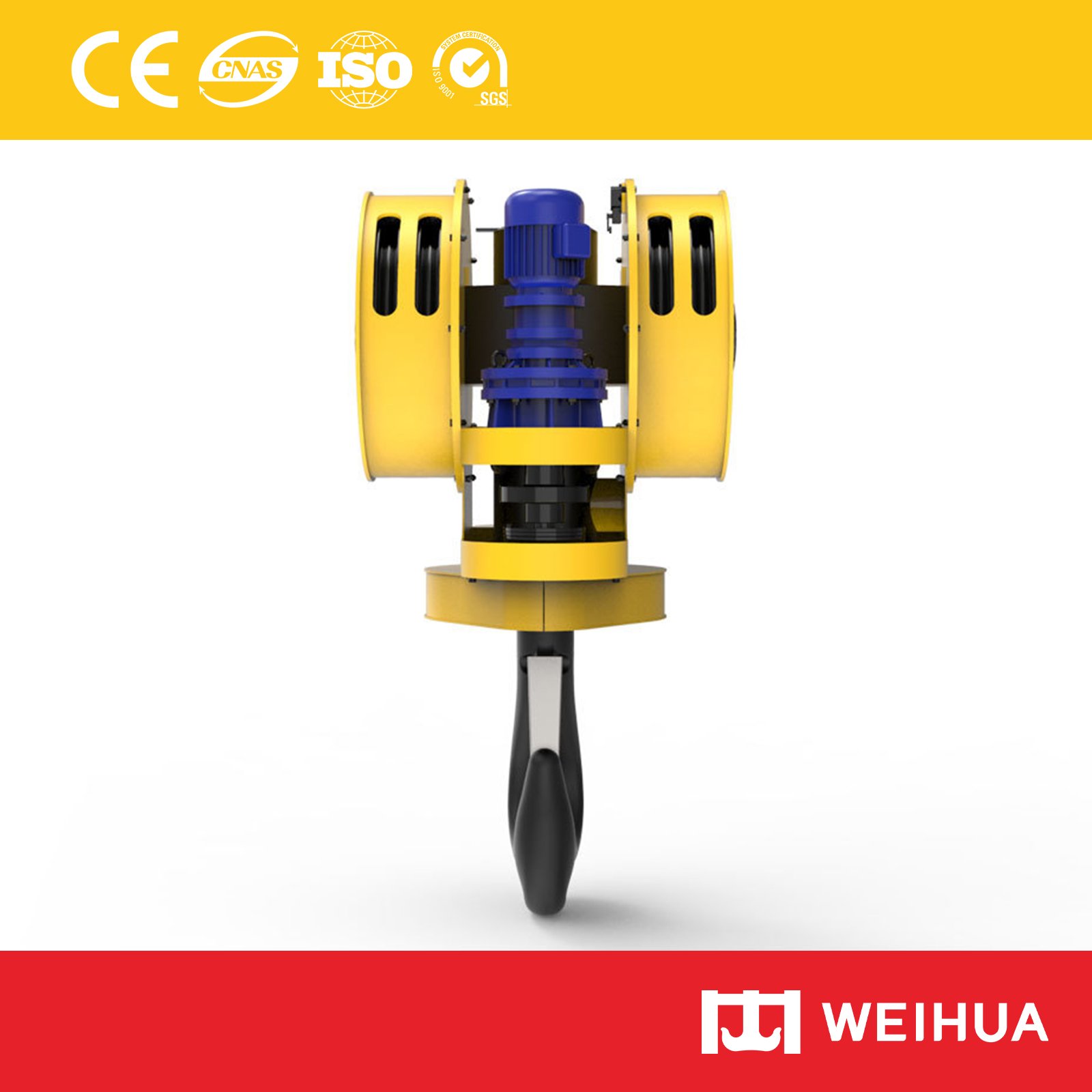
Plate hook
There are two types of hooks: single hook and double hook. This type of hook has a simple structure, reliable operation and easy maintenance. Single hook is mostly used on casting cranes, while double hook is mostly used on general cranes with a capacity of more than 100 tons.
Forged hook
Forged hooks are divided into single hooks and double hooks. Because the single hook will be offset when subjected to force, it is not as advantageous as the symmetrical force of the double hook. Therefore, small and medium-sized cranes below 75 tons mostly use single hooks, and large-tonnage cranes above 75 tons mostly use double hooks.
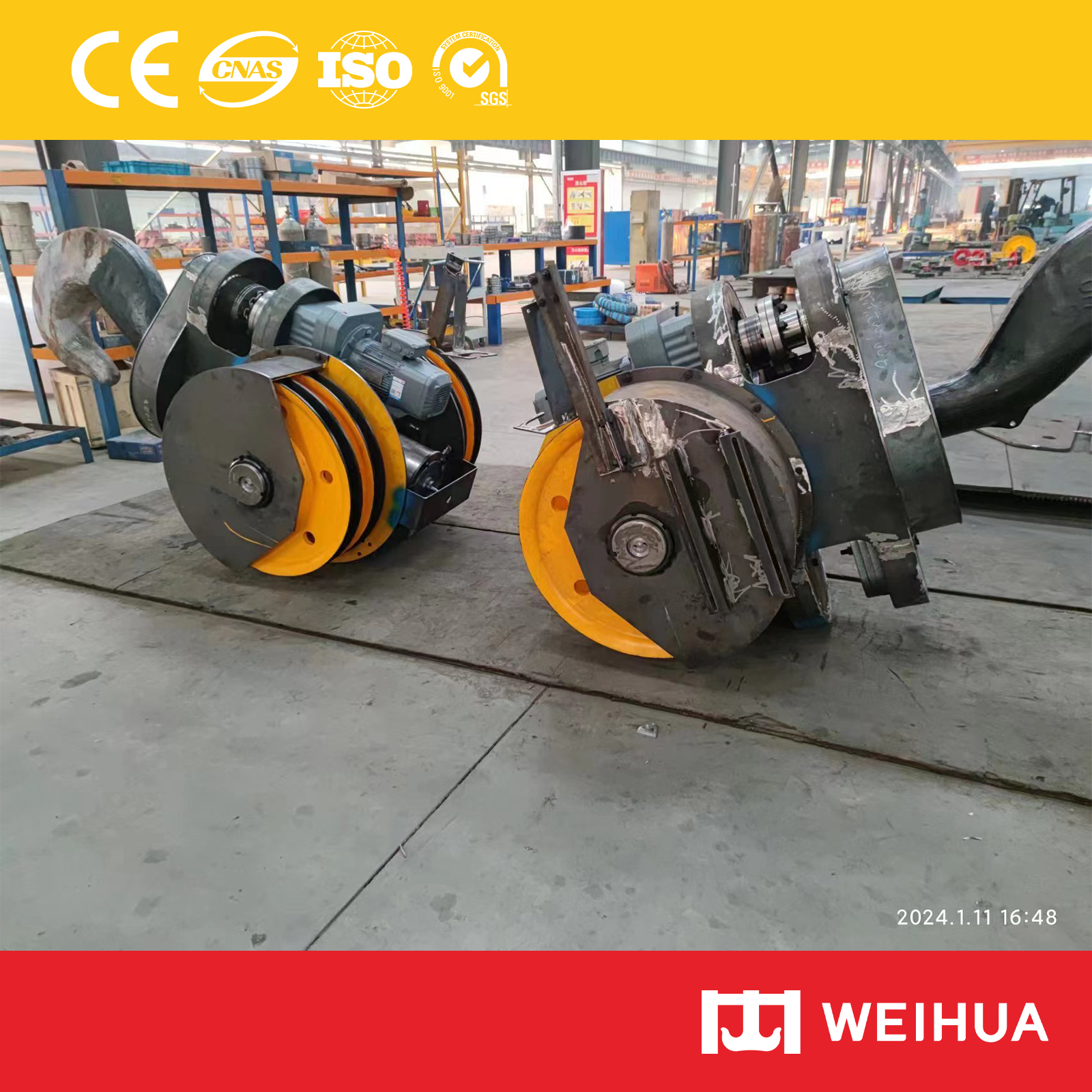
How can the user carry out daily maintenance of the hook?
The safety and stability of the hook plays an important role in production safety. The user unit should regularly conduct daily safety inspections and maintenance on the hook to ensure production safety. Generally speaking, the daily inspection and maintenance of the hook includes the following:
(1) Clean the crane hook assembly body with a non-corrosive organic solvent, wipe it dry and inspect it with a magnifying glass. If cracks are found, replace it immediately and do not perform repair welding.
(2) Check the hook opening and the wear of the dangerous section.
(3) Check whether the pulley groove and rim are evenly worn, whether the wire rope matches the groove, and whether the pulley is loose or shaking.
(4) Ensure that the hook rotating part rotates freely and the clearance is not too large. If it is difficult to rotate or it is stuck, check whether the bearing or sleeve is damaged or not lubricated enough.
(5) Check the main hook for overload damage.
(6) Check the hook guard, crossbeam and other parts. If the guard is severely worn, it can be repaired by welding and then re-bored. If a new part is replaced, it is necessary to ensure that the mechanical properties of the material meet the requirements.
(7) Check the anti-unhooking device.
How to conduct regular inspections on hooks?
Cranes need to undergo regular inspection once every two years: cranes used to lift molten metal, tower cranes, elevators, and mobile cranes need to undergo regular inspection once a year, and this inspection must be performed by dedicated inspectors.
① Perform nondestructive testing on areas of the workpiece where stress is concentrated. If cracks are detected, immediately stop using the hook and replace it.
② Regularly inspect the wear or corrosion of the hook's critical sections. If the actual dimensions are less than 95% of the original basic dimensions, replace the hook.
③ If the hook's twist angle exceeds 10°, replace the hook.
④ If the hook's opening is deformed by 10% of the original basic dimensions, replace the hook.
⑤ Repair welding is not permitted on hook defects.
⑥ Plastic deformation of the critical sections or hook handle is prohibited.